
Key Takeaways
- Around 23% of the global kelp biome overlaps with a protected area. This is an increase from 16% in 2024.
- Thirteen regions have more than 30% of their kelp biome within protected areas, while 23 regions remain below this level.
- Protected-area coverage is highest in regions including the Sub-Antarctic Islands, Atlantic France, Japan, South Australia, Atlantic Spain and Portugal, the Mediterranean, California, the United Kingdom, Ireland, Argentina, Western Australia, Washington, and Chile.
- Strong protection of kelp forest ecosystems is very rare. Only 1.2% of the global kelp biome can currently be confidently identified as highly protected, with an additional 1.86% identified as moderately protected.
- Several regions remain particularly under-protected, including Aotearoa New Zealand, the Russian and Canadian Arctic, eastern Canada, China, and Tasmania.
There is clear progress in the effort to create protected areas around the world’s kelp forests. In two years, there has been a seven-percentage-point increase in protected-area coverage of kelp forests,1 and 13 of 36 regions have potentially met their 30x30 targets for kelp ecosystems, although the level of protection is low and validation of actual habitat distribution is required.
However, upon closer inspection, the effectiveness of these protection measures remains unclear. For roughly one-third of kelp habitat within protected areas, the level of protection is currently unknown. The headline coverage estimate should therefore be interpreted cautiously: most kelp habitat within protected areas either has relatively weak protection or lacks sufficient information to assess protection strength confidently.
The protection level of one-third of global kelp forests in protected areas is currently unknown.
Thirteen regions have more than 30% of their kelp biome within protected areas. A further 23 regions remain below the target, with particularly low coverage in Aotearoa New Zealand, the Arctic, Peru, eastern Canada, China, and Tasmania.
High-quality protection is even more geographically concentrated. The Sub-Antarctic Islands, South Africa, and South Australia stand out as relative bright spots for the proportion of their kelp biome (>10%) within highly protected areas. These examples demonstrate that stronger protection is achievable, but they remain exceptions within a global system still dominated by weakly protected, poorly classified, or insufficiently reported areas.

Figure 4.1. Protected-area coverage of the global kelp biome by region. Colours indicate the proportion of the modelled biome within protected areas; circle size indicates biome extent. Also shown,Proportion of the modelled kelp biome within highly protected areas, by region. The comparison reflects the protection categories and habitat layer used in this assessment; see Section 9.2 for the methods.
4.2 Why we look at protected areas
Marine protected areas (MPAs) are essential spatial management tools for supporting marine biodiversity by managing human activities that impact marine life. As a result, the amount of the ocean protected has increased in the past decades. The level of protection varies among individual MPAs, with some fully restricting activities like fishing, while others allow a broader array of uses (e.g., IUCN levels 4-7, LFP 1-3). Restricted MPAs provide the greatest benefit for biodiversity and can provide opportunities for local stakeholders and rights holders. However, combining multiple levels of protection is crucial to conserve kelp forests effectively while also accommodating the rights and needs of Indigenous peoples, local communities, and industries.
MPAs benefit kelp ecosystems by directly or indirectly protecting kelp populations, associated fish, invertebrates, birds, and marine mammals. Directly, they can regulate kelp harvesting and limit development, while indirectly, they protect species vital to kelp health. These include sea urchin predators, which help control urchin populations and promote kelp growth. Overall, MPAs have a positive impact on kelp populations and associated biodiversity, and can help maintain a diverse and healthy ecosystem, but are not a standalone solution for kelp management.2
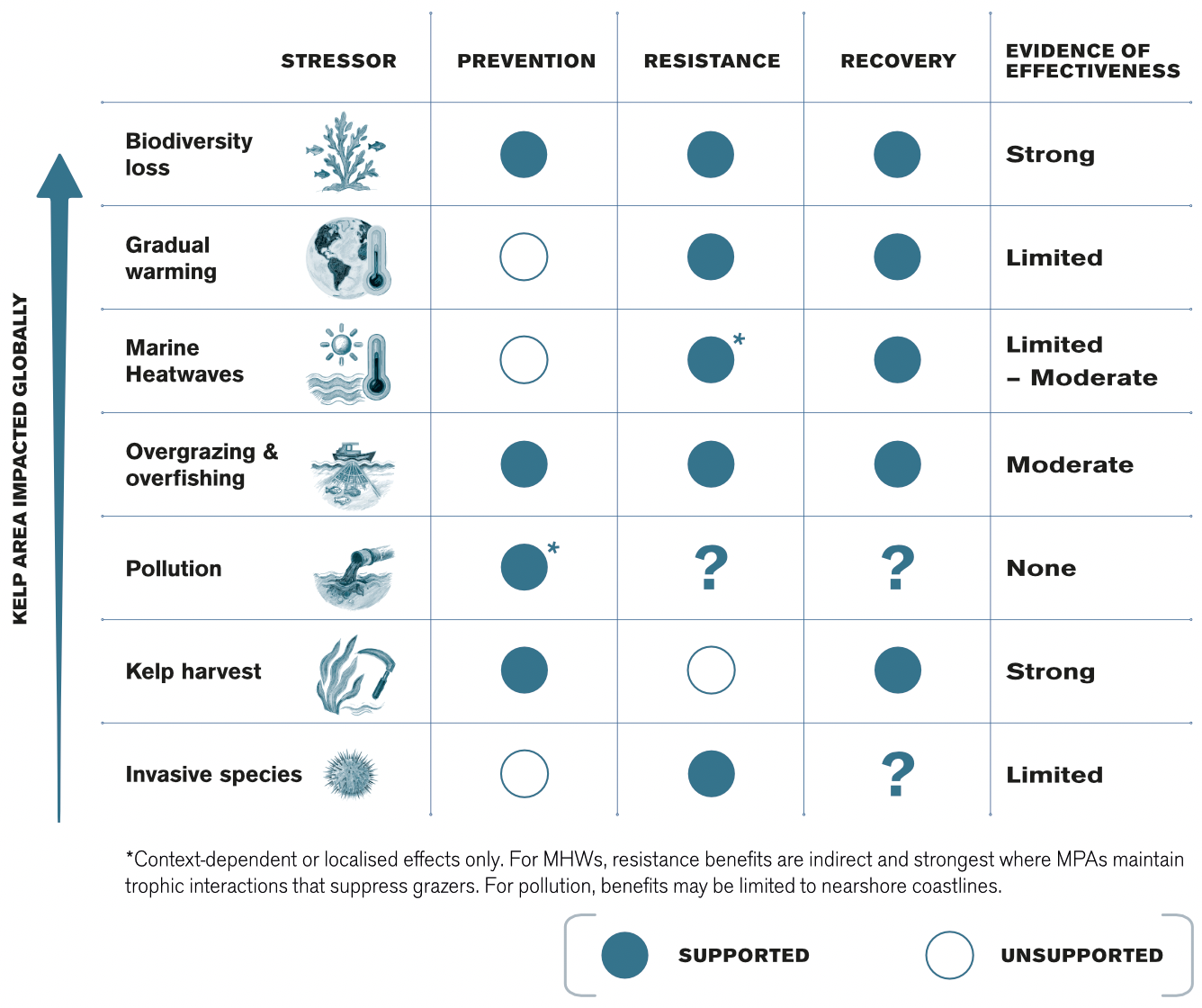
Figure 4.3. Proposed pathways through which marine protected areas may support kelp forests.2,3
4.3 Gaps and opportunities
The main limitations in assessing the overlap between kelp forests and protected areas are the incomplete and, in some regions, inaccurate representation of global kelp forest distributions, and the still-developing assessment of how effectively protected areas are managed (See Section 9.2 for full methodology). Although global habitat maps and protection-strength datasets are improving, important geographic and reporting gaps remain. These uncertainties affect both estimates of how much kelp habitat falls within protected-area boundaries and conclusions about the quality of protection provided within those areas.
We will continue to use and produce the best available knowledge to make these assessments in future.