
Key takeaways
Kelp forests cover one-third of our world’s coastlines.
Areas within 50 km of a kelp forest are home to 950 million people and account for 18% of global GDP.
40–60% of these systems have declined in the last 50 years.
1.1 Kelp forests
Simply put, kelp forests are the forests of the sea.
Kelp forests sit at a striking ecological and social crossroads. Kelp forests occur along a third of the world’s coastlines (Figure 1.1), and more than 950 million people live within 50 km of one1. These giant seaweed forests are among the most productive ecosystems on Earth.
Collectively, they generate an estimated US$500 billion in potential value each year2. They also support an extraordinary range of life, from microscopic bacteria to sharks and whales. People are equally connected to these underwater forests through the food, livelihoods, cultural values, coastal protection, and other benefits they provide.
Yet despite their scale and importance, kelp forests remain poorly recognised in many parts of the world. They are often absent from public awareness, overlooked in environmental planning, and inconsistently defined in policy and regulation. In most countries, only a very small share of environmental funding is directed towards kelp forests. As a result, they are generally less well mapped, studied, monitored, managed, and protected than terrestrial forests, coral reefs, mangroves, or seagrass meadows.
This situation is, however, beginning to change. Kelp forest protection, sustainable management, and restoration are expanding, supported by a growing funding pool and a broader network of practitioners, communities, governments, and researchers. Public awareness is also increasing, helping kelp forests move from relative obscurity towards a more prominent place in conversations about ocean health.
This momentum comes at an important time. Global interest is growing in approaches such as nature-positive development, blue carbon, and biodiversity credits. These emerging policy, finance, and market frameworks could create significant opportunities for kelp forests, but only if they are recognised clearly and represented credibly. The challenge now is to ensure that greater visibility translates into sustained investment, stronger policy, better knowledge, and effective conservation.
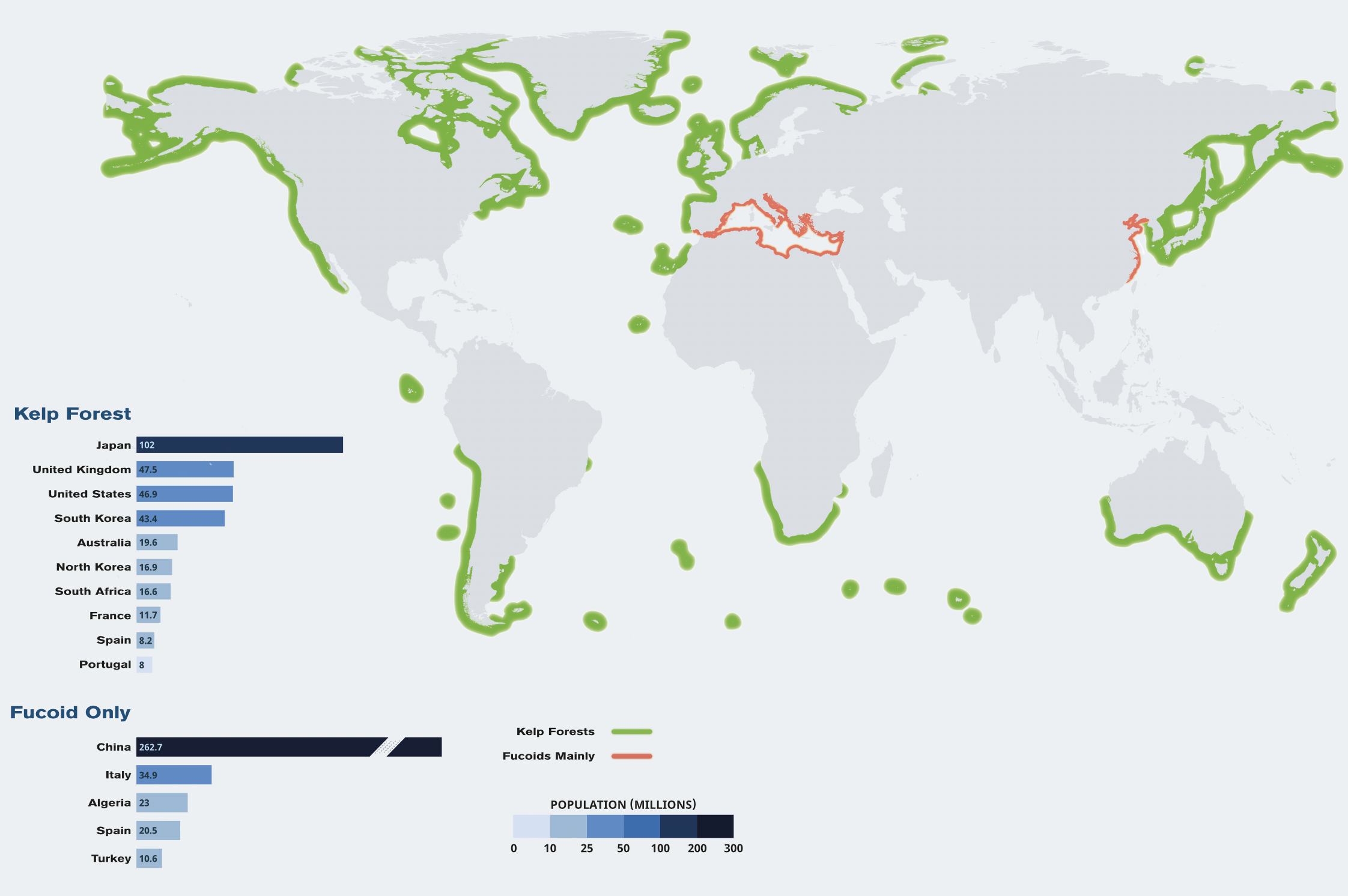
Figure 1.1. Global kelp forest distribution, showing regions with both Laminariales and Fucales, regions with fucoids only, and regions with minor kelp populations1.
1.1.1 What is kelp?
Kelp is both an organism and a habitat. As an organism, kelp is a structurally complex brown seaweed (see full list here) that creates a canopy. Most kelp belong to the taxonomic orders Laminariales and Fucales and are referred to as macroalgae: large, visible algae or seaweeds.
All kelps are a type of seaweed, but not all seaweeds are a type of kelp.
Kelps are attached to the seafloor, grow vertically, create a leafy structure and canopy, absorb carbon and produce oxygen, and cycle nutrients. Several kelp together create a kelp forest, although the term ‘kelp forest’ does not have a strict definition. Kelps create unique, complex homes for animals in their blades (“leaves”), stipes (“trunks”, “stems”), and holdfasts (“roots”), and their very presence defines the ecosystem (Figure 1.2).
1.1.2 Distribution and depth
Kelp forests are mostly subtidal (always under water), extending from the water’s edge down to 15–25 metres, within sunlight’s reach. In particularly clear waters, they can live at depths of up to 40–60 metres and, in very rare instances, all the way down to 200 metres. Kelp forests are cold-water (approximately 0–25 °C) ecosystems and are distributed on every continent from the subtropics to the poles. The only kelp forests in the tropics are in very deep waters, and they occupy a very small area.
1.1.3 Meet the kelp
Kelp species come in many shapes and sizes, ranging from tens of centimetres to tens of metres tall.
Surface canopy: These species are over 10 metres tall from the seafloor to the surface. They have a strong holdfast gripping them to the seafloor, flexible stipes, and dense canopies that float on the surface, where they can often be seen from shore or by satellite.
Mid-water canopy: These kelps have stiff, tree-trunk-like stipes that grow upright in the water, with leaves growing from the top. They live only beneath the waves and do not usually break the surface.
Seafloor canopy: These kelps have big leafy branches that grow from the top of the stipe down to the seafloor. This creates a dense canopy that you have to brush aside to swim through.
Intertidal canopy: These kelps straddle the line between land and sea and form dense mats on the seafloor, where they are often exposed to the air at low tide.
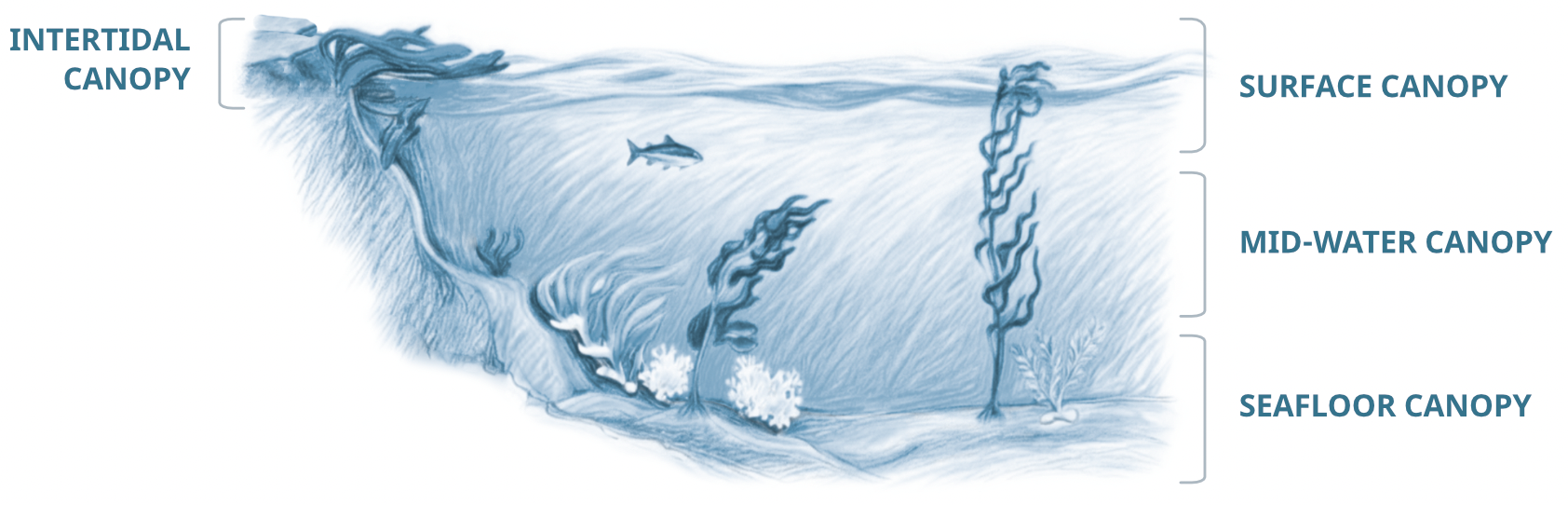
Figure 1.2. Kelp growth forms and examples of forest-forming species.
Several species have captured public attention, either for their ecological and economic significance or simply because of their striking appearance.
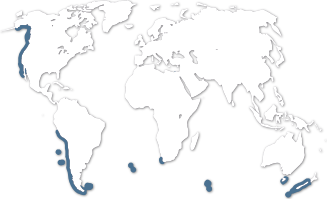
Giant kelp (Macrocystis pyrifera) is one of the most iconic species of kelp, recognised for its dense, towering forests that are vital to marine biodiversity. It is a perennial species, present all year round, and commonly found along the eastern Pacific from Alaska to Mexico. Further south, it is well distributed along the west and south coasts of South America, with populations also in New Zealand, southern Australia, and many oceanic islands in the Southern Ocean.
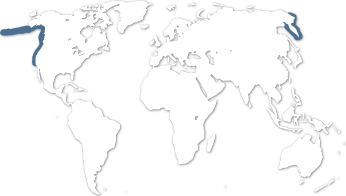
Bull kelp (Nereocystis luetkeana) is found predominantly along the west coast of North America, beginning in central California and extending to the Aleutian Archipelago and further into Russia. Bull kelp is an annual species with cycles of growth, reproduction, and senescence (ageing and decline) each year. It gets its common name from its bullwhip-like form and has been an important part of Indigenous cultures in North America for millennia.
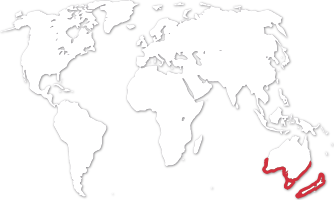
Golden kelp (Ecklonia radiata) forms extensive forests in the western Pacific and is the key component of the Great Southern Reef on the southern half of Australia.
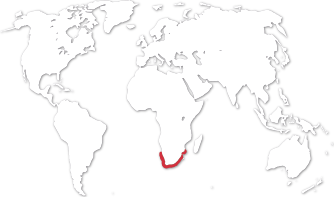
Bamboo kelp (Ecklonia maxima) is found only off the coast of South Africa, and sharks weave through its towering trunks. It was recently featured in the Oscar-winning documentary, My Octopus Teacher.
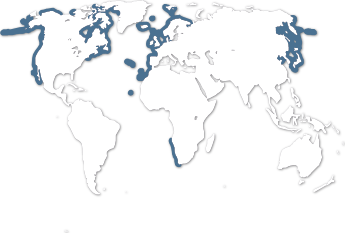
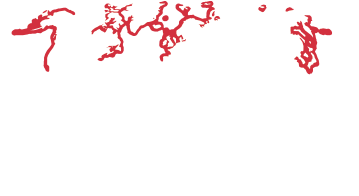
Laminaria and Saccharina are known for the big, broad leaves of many of their species. These species are well known for their use in food (known as kombu in Japan), are often grown for aquaculture, and have many important medical and chemical derivatives. They are widespread across the Pacific, North Atlantic, and Arctic.
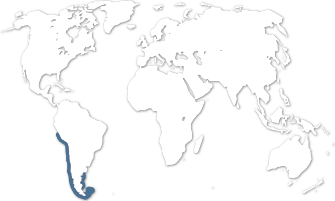
Lessonia species are native to the southern Pacific Ocean. As they are often intertidal and subtidal, they provide important connections between habitats in coastal zones. Lessonia species support one of the largest wild harvests of kelp on the planet.
The Cystoseira, Cystophora, and Fucus fucoid kelps create shorter, dense meadows of kelp habitat along rocky seashores but are also found in subtidal regions.
1.2 Threats and stressors
Threats to kelp forests can generally be categorised into three main categories.
Ocean warming: Short-lived marine heatwaves or prolonged periods of elevated water temperature can push kelp beyond their biological limits and interfere with growth, reproduction, and survival, while also amplifying the impacts of overgrazing.
Overgrazing: An overabundance of animals that eat kelp forests, often linked to ecological imbalance such as predator loss (sea otters, sunflower sea stars, wolffish, lobsters, and predatory fish) or range expansions of grazers.
Nutrient and physical disturbances: Activities that physically destroy kelp or disrupt part of its life cycle. Examples include removal for harvest or development, light limitation (excess sedimentation or nutrients), sediment scouring of kelp spores from the seafloor, or a lack of nutrients needed for growth.
While we focus on the three key drivers described above, additional reasons for local kelp decline include invasive species, freshwater outflows, ice scouring, or diseases.
At the global scale, experts rank warming as the greatest threat, followed by overgrazing, and then physical disturbances. The effects of these stressors vary locally, regionally, and globally (Figure 1.3).
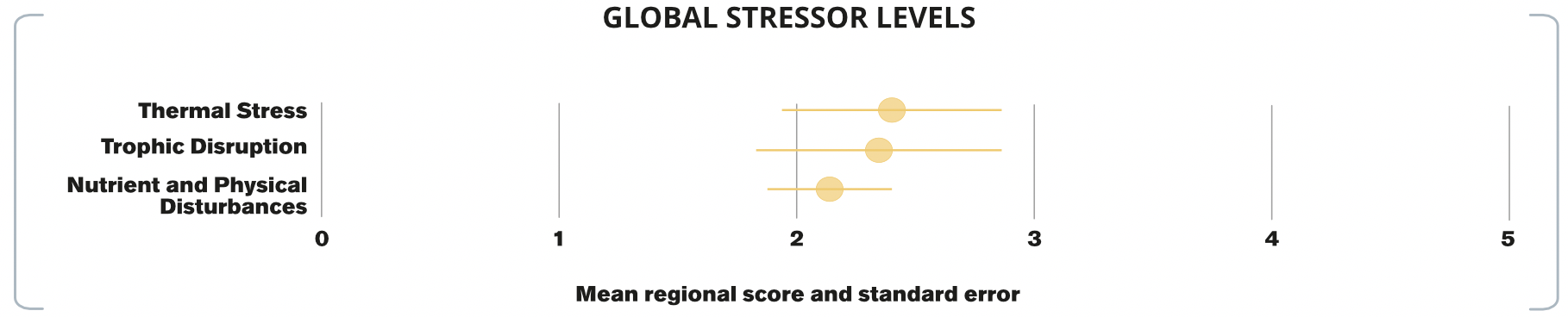


Figure 1.3. Expert assessments of stressors contributing to kelp forest decline. Summary scores are shown above the regional map. See Section 9.1 for the survey methods.
1.3 Kelp Forest Health
The broad global pattern is one of decline, although kelp forest condition varies considerably among regions (Figure 1.4). Long-term datasets indicate that roughly 40–60% of kelp forests have experienced reductions in abundance globally.3 The kelp forests which have experienced the greatest losses are concentrated near the warm edges of kelp distributions, where marine heatwaves compound ongoing ocean warming and can drive rapid, large-scale collapse. In some of these locations, kelp forests are replaced by other seaweeds and species better adapted to warmer conditions, making natural recovery and restoration more difficult.
Across temperate, mid-latitude regions, kelp forests are more commonly stable. If degraded, losses are usually less severe than in warm-edge populations. The state of kelp health depends on how local temperature trends interact with other pressures, including harvesting and intense grazing by sea urchins. These populations often show greater capacity to persist through, or recover from, extreme heat than kelp forests already living near their upper thermal limits.
At higher latitudes and in cool-water refuges, kelp forests are generally stable or expanding. In some regions, heat-tolerant species are replacing cooler-water kelps, maintaining overall cover but altering ecosystem structure and function. In the Arctic, limited evidence suggests kelp forests are largely stable or increasing, with potential for further expansion as waters warm in some areas. However, melting of glaciers, permafrost, and other ice stores may increase sedimentation and lower salinity, potentially offsetting these gains.
1.4 The race to help our kelp
December 2022 marked the launch of the Kunming-Montreal Biodiversity Framework. This landmark agreement was adopted by 196 countries and agreed to the effective protection of 30% of the world's ecosystems and the restoration of 30% of the world's degraded ecosystems by 2030 (often called 30x30).4 The agreement specifies that these gains should be representative of the ecosystems in each country’s jurisdiction. As such, national targets for the protection and restoration of coastal ecosystems must be adaptive and ensure that all critical habitats are quantified and represented in these international discussions and target setting. Yet, this global conservation agenda was advancing against a backdrop where kelp forests remained consistently underrepresented. For example, a 2023 study5 showed that for every mention of kelp forests in international policy documents, seagrass, salt marsh, coral reefs, and mangroves were referenced 8–43 times as often.
Most importantly, there was no flagship global agenda for kelp forests, in contrast to seagrass, salt marsh, coral reefs, and mangroves.
The Kelp Forest Challenge was launched in February 20236 to address the critical gap in representation of kelp forests in international targets, policies, and agreements, and to ensure their inclusion in local and global marine management decisions. The Challenge is a collaboratively developed mission to save and enhance kelp forests around the world and is at the intersection of local projects and global initiatives such as 30x30.
The Kelp Forest Challenge calls for:
The protection of 3 million hectares of kelp forests by 2040
The restoration of 1 million hectares of kelp forests by 2040
Increased awareness and appreciation of kelp forests
US$14 billion raised to support these activities by 2040.
The Challenge provides an open, participatory, pledge-based system to incentivise kelp conservation and raise awareness. The Challenge intentionally encourages any sector of society to participate, including businesses, governments, communities, universities, and individuals. The Kelp Forest Challenge is hosted by the Kelp Forest Alliance, a global home for kelp forests that brings together people and information to help our kelp.
The Kelp Forest Challenge calls for holistic management of kelp forests, which requires a combination of strategies. These can include marine protected areas (MPAs), improved fisheries management, habitat restoration, and controlling invasive or overabundant species. This management will depend on collaborative efforts between local communities, governments, and conservation organisations, and management decisions should be grounded in scientific research, respect cultural contexts, and consider socio-economic activities to ensure sustainable and equitable outcomes for both people and marine ecosystems.
Breakout box: Pledge spotlight
Hyundai is supporting kelp forest restoration and recognition through partnerships with government agencies and local organisations.
Since 2023, Hyundai has worked with South Korea’s Ministry of Oceans and Fisheries and the Korea Fisheries Resources Agency to support sea forest restoration along the coast of Ulsan. The initiative has included the formal naming of restored sea forests in Ulsan and the recognition of a natural sea forest near Ulleungdo.
This work has since expanded through Forests Without Names,7 an initiative focused on giving previously unnamed sea forests clear, place-based identities. Sea forests in Australia and Argentina have now been named through the initiative.
Many sea forests remain unnamed and poorly recognised, limiting their visibility to communities, managers, and decision-makers. Naming these ecosystems can strengthen public recognition, communication, and long-term stewardship.
The initiative illustrates how businesses can support the Kelp Forest Challenge through targeted partnerships and place-based conservation action.