View Metrics
People living within 50km of kelp forests:
5,770,628GDP(B) within 50KM of Kelp:
$434.11 billionOcean Warming Rate by 2100 (°C):
2.47 °CKM2 of Kelp:
9,212Key Species:

Nereocystis luetkeana
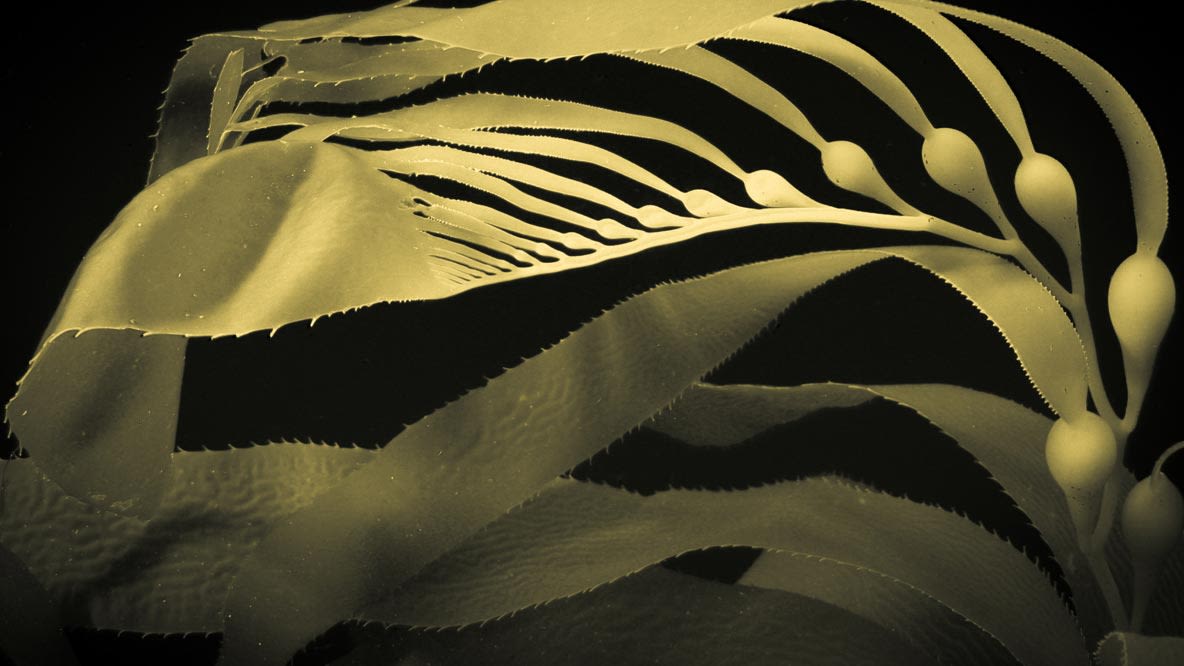
Macrocystis pyrifera
Washington State has taken significant steps to coordinate and implement marine vegetation strategies that protect and restore kelp forests, including the Puget Sound Kelp Conservation and Recovery Plan and the Washington State Kelp Forest and Eelgrass Meadow Health and Conservation Plan. One of the most visible milestones was the 2025 designation of bull kelp (Nereocystis luetkeana) as the official state marine forest. Co-presented by Tribal and non-Tribal representatives, this designation reflects growing recognition of kelp’s ecological, cultural, and economic importance, made possible by advances in research, policy, restoration, and public engagement across the state. Washington is shifting from reactive management toward proactive planning. In 2022, the state legislature passed a law—now being implemented—directing the Washington Department of Natural Resources (DNR) to conserve or recover more than 4,000 hectares of kelp forests by 2040. In partnership with Tribal co-stewards, DNR has also established kelp protection zones in select areas. In parallel, the Washington Kelp Policy Advisory Group has convened experts from multiple agencies and sectors to outline strategic priorities and recommendations to strengthen kelp governance. These recommendations (nwstraits.org) include developing guidance and best practices, expanding mapping and priority setting, and maintaining a long-term advisory group. Kelp partners are also working with agencies to explicitly recognize kelp and strengthen protections within state and local plans, codes, and policies. Washington has invested several million dollars in kelp research and recovery through Tribes, state agencies, non-profits, community groups, and local governments. For example, the Puget Sound Habitat Strategic Initiative, in collaboration with federal partners, has invested approximately USD 3 million over the past three years to address key gaps in kelp research, monitoring, and restoration. Kelp is now mapped and monitored using diverse approaches, ranging from in-water surveys to aerial methods, integrating scientific monitoring, Traditional Ecological Knowledge, and coordinated volunteer efforts. These programmes directly inform management through tools such as the Floating Kelp Indicator, which compiles data from multiple organizations to assess and track statewide trends. Recent research has advanced understanding of kelp population drivers and stressors (Fales et al. 2023; Weigel et al. 2023), genomics (Gierke et al. 2023; Bemmels et al. 2025), microbiomes (Hochroth and Pfister 2024), and the ecological and social benefits of kelp forests (Shaffer et al. 2023; Weiss et al. 2025). Together, this work improves tracking of kelp health, clarifies causal mechanisms, and highlights the value of kelp ecosystems. While no large-scale kelp restoration or mitigation projects have yet been implemented, restoration techniques continue to advance. Bull kelp restoration trials have shown consistent success in growth and reproduction. Outplants on longlines at discrete sites have grown in each of six consecutive years, in some cases producing limited numbers of wild, next-generation kelps. Practitioners are collaborating internationally to develop scalable cultivation and seeding methods aimed at establishing self-sustaining populations. The Kenneth K. Chew Center for Shellfish Research and Restoration has expanded to include Washington’s first kelp nursery for restoration, along with a germplasm bank housing specimens from more than two dozen sites.