South Korea

Kelp Region

South Korea

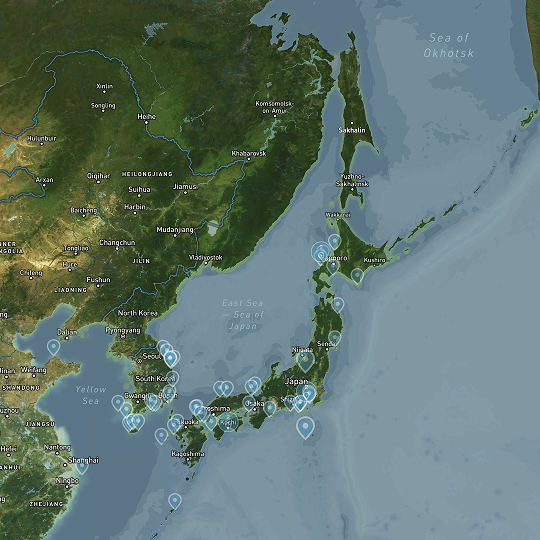
South Korea runs one of the world’s largest kelp restoration programs. Since 2009, the national marine forest initiative has pursued large targets using seafloor enhancement, transplants and spore dispersal, followed by multi-year maintenance and monitoring. Private-sector funding has recently added support in some locations. The next need is durability by deepening local stewardship and long-term governance with fishers, communities and local governments so restored sites persist beyond project cycles.

Pledges Status

  • Committed To The Kelp Forest Challenge:

    Yes
  • Total Pledges:

  • Area Pledged:

    Ha for restoration
  • Money Pledged:

    Million USD for conservation
  • Time Pledged:

    Hours of work
  • Audience Reached:

Area Restored Or Protected

  • Top 4 Area Restored By Species

    ha restored
    Ecklonia cava
    Sargassum horneri
    Ecklonia stolonifera
    Multiple
  • Total Area Protected

    ha protected

Community Statistics

  • Size of the Community

  • Size of the Community

  • Number of Restoration Projects

    How many projects have started or completed restoration efforts within this Region.
  • Related Papers

    We need knowledge to inform our decisions, see all the research papers published to help manage kelp forests within the Region.

Ecosystem Services

  • Top 4 Genus Restored (Ha):

    genera
    projects
    Ecklonia
    Sargassum

View Metrics

People living within 50km of kelp forests:

43,453,768

GDP(B) within 50KM of Kelp:

$2,079.6 billion

Ocean Warming Rate by 2100 (°C):

3.47 °C

KM2 of Kelp:

47,135

Key Species:

Ecklonia cava

Undaria pinnatifida

Saccharina japonica

Kelp restoration in South Korea is a pathway to strengthen communities, rebuild fisheries, buffer shorelines, and sustain livelihoods. The scale achieved to date has only been possible through consistent government support and broad societal buy-in.

Kelp forest management in South Korea is led primarily by the Korea Fisheries Resources Agency (FIRA) through the national Marine Forest Program. Initiated in 2009 and scheduled to run until 2030, the programme targets restoration of 54,000 ha of kelp forests (Yang et al. 2019; Eger et al. 2020). The programme continues to expand, with an additional US$0.88 million allocated in 2025.

Restoration approaches include substrate enhancement, transplantation and spore dispersal, supplementary planting, and ongoing maintenance, alongside efforts to quantify blue carbon functions. Projects include four years of post-intervention monitoring to assess ecological outcomes and support adaptive management when targets are not met.

A more recent development is increased private-sector involvement. An undisclosed company, working with the Ministry of Oceans and Fisheries and FIRA, has supported restoration near Pohang, donating approximately USD 7.35 million to restore 2.28 km². The stated motivations include biodiversity benefits and enhanced blue carbon capacity.

The Korean government is increasingly framing marine forests as blue carbon ecosystems. According to FIRA, the 291.82 km² of marine forests established to date are estimated to sequester approximately 98,000 tonnes of CO₂, described as equivalent to the annual emissions of about 40,000 vehicles. These efforts are also being supported by governance reforms, including shifts from municipality-led models toward integrated national–local co-management systems.

South Korea’s large-scale marine forest restoration—underway since the early 2000s and led by the Ministry of Oceans and Fisheries—has gradually broadened beyond government-led projects to involve fishers, civic groups, and private enterprises, including through ESG-linked programmes. This evolution creates an opportunity to move from one-off interventions to sustained management, monitoring, and service delivery.

At the policy level, the work is embedded within national strategies including the Basic Plan for the Development of Marine and Fisheries, the Marine Environment Management Master Plan, and the Carbon Neutrality Roadmap, strengthening alignment between restoration and climate mitigation goals.

Over the past two decades, South Korea’s marine forest restoration has been driven primarily by state initiatives, delivering notable ecological and socio-economic outcomes. Continued progress, however, will depend on broadening participation beyond government. Stronger engagement from local fishers, civic groups, and private enterprises is essential to complement state capacity and sustain long-term outcomes. Future effectiveness will require durable management, closer alignment with community priorities, and deeper private-sector involvement.

Scientific Paper

Characteristics of seaweed communities in the coastal waters of the East Coast and the creation of marine forests

Park Jung-gu
Open Link

Scientific Paper

Creating a marine forest using artificial reefs in the seawater area of Jeju

Kim Dae-kwon
Open Link

Scientific Paper

Creation of a seaweed plant for restoration of the mud record phenomenon

Namgil Kim
Korean Style, Vol. 15.
Open Link

Scientific Paper

SungKyunKwan University Ecology lab data (2018 Jeju Sea Forest Creation Technique and

Open Link

Scientific Paper

SungKyunKwan University Ecology lab data (Gangwon-do Jangho Experiment Complex Sea Urchin Removal

Open Link
Chonnam National University
East Sea Regional Fisheries Research Institute
Incheon National University