
View Metrics
People living within 50km of kelp forests:
16,565,919GDP(B) within 50KM of Kelp:
$236.83 billionOcean Warming Rate by 2100 (°C):
1.76 °CKM2 of Kelp:
14,618Key Species:
Ecklonia maxima
Laminaria pallida
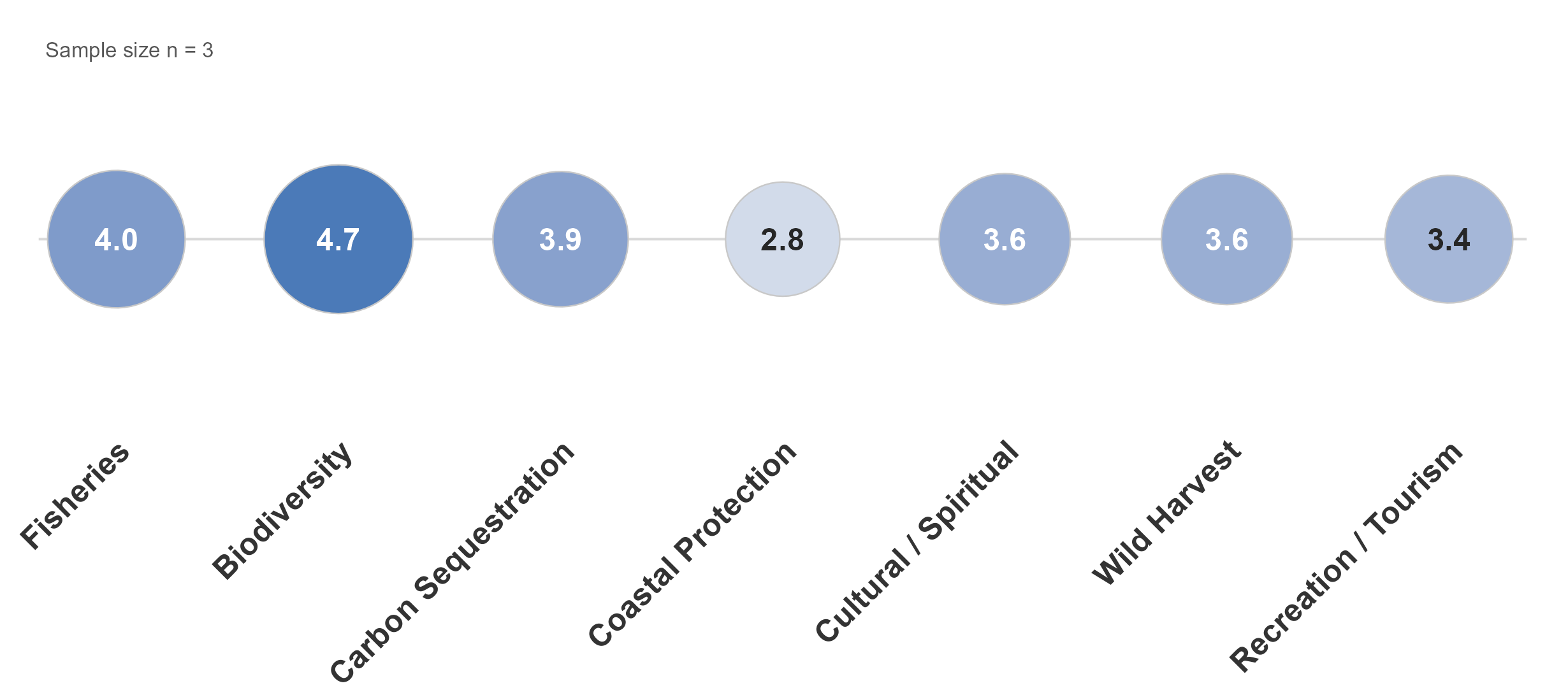
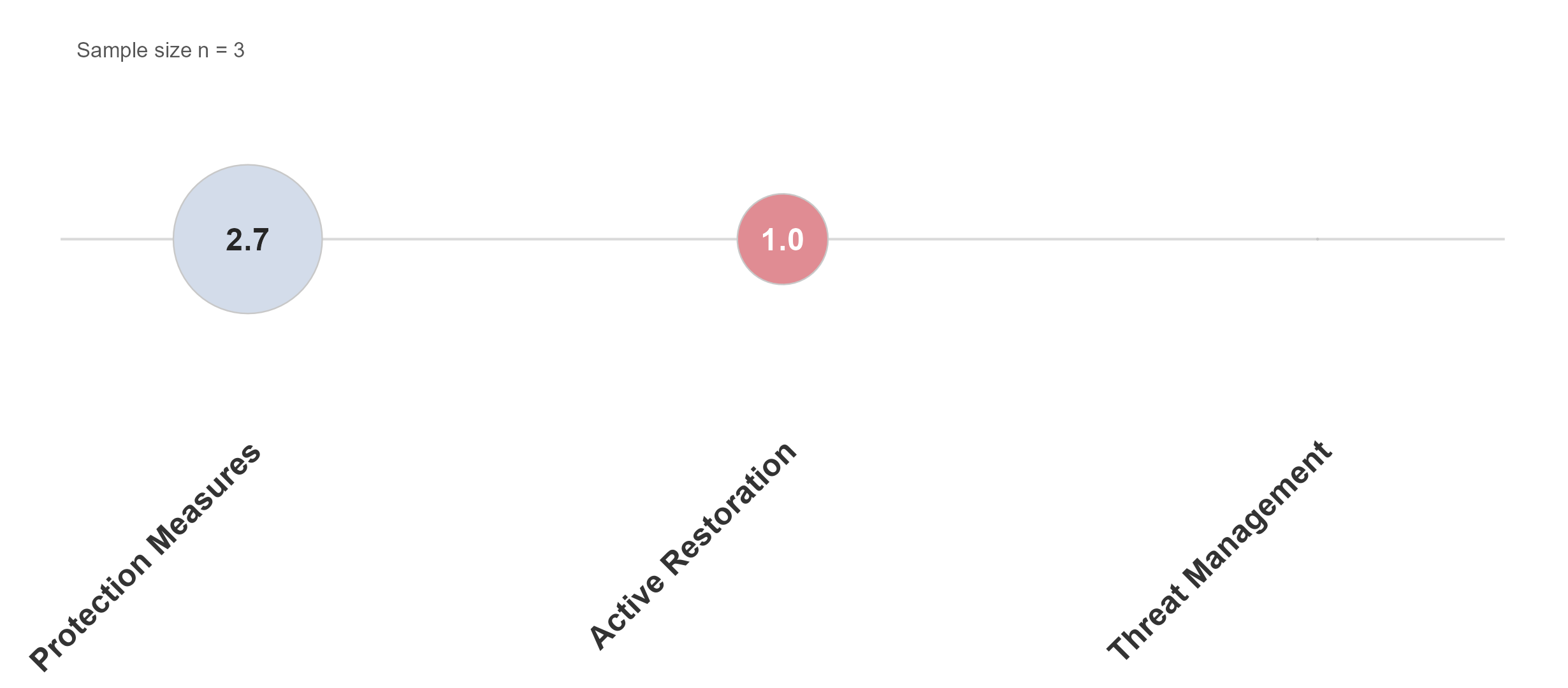
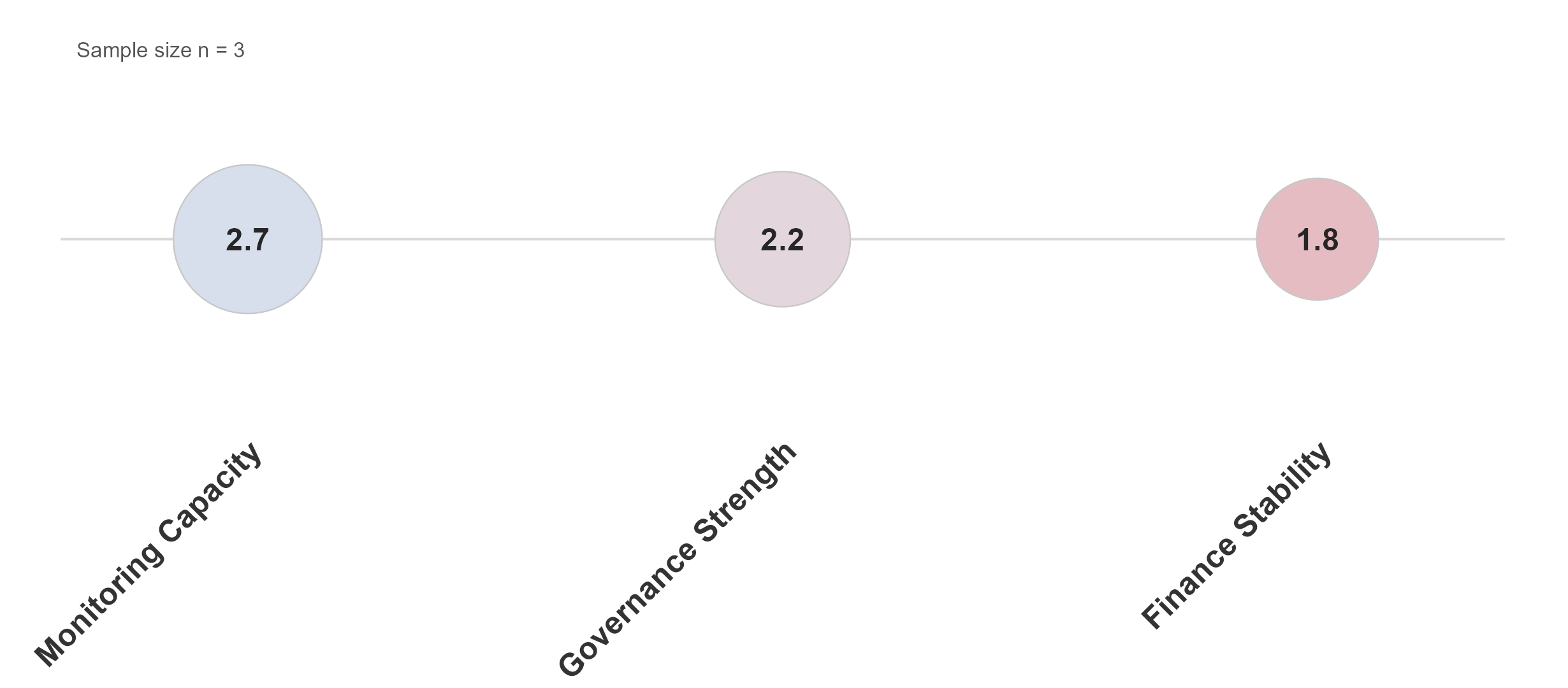
Efforts to protect and manage the Great African Seaforest (Ecklonia maxima, Laminaria pallida, and locally also Macrocystis pyrifera and Ecklonia radiata) continue to grow. In 2019, Operation Phakisa expanded national MPA coverage from 0.4% to ~5% of South Africa’s Exclusive Economic Zone (EEZ), with roughly half designated as no-take zones (Sink et al. 2019). In parallel, the Department of Forestry, Fisheries and the Environment (DFFE) consolidated kelp harvesting regulations and prescribed frond-only cutting to reduce ecological damage (DFFE 2021). Scientific monitoring capacity has also expanded, building on local aerial mapping approaches (e.g., Dunga et al. 2024), the global Kelpwatch programme (1984–present) (The Nature Conservancy 2023), NASA’s Biodiversity Survey of the Cape (BioSCape) campaign (in collaboration with SANBI), and Sentinel-2 remote sensing. Together, these programmes support long-term monitoring plots and spatiotemporal tracking of canopy dynamics. Kelp monitoring is increasingly integrated with ecological datasets on West Coast rock lobster (Jasus lalandii), sea urchin range shifts (Parechinus angulosus), abalone (Haliotis midae) populations, and kelp recruitment (Day and Branch 2002; Blamey et al. 2010). The 1001 Seaforest Species programme, led by Sea Change, is cataloguing over a thousand kelp-associated species and making these data publicly accessible. Regionally, the Blue Benguela Partnership and Blue Nature Alliance convene actors from Angola, Namibia, and South Africa to safeguard the Benguela Current Large Marine Ecosystem (BCLME). The Blue Africa programme is also evaluating biodiversity and carbon sequestration benefits from management and conservation of Africa’s coastal and marine ecosystems, including—but not limited to—kelp forests. Cultural visibility of kelp has increased rapidly. This shift is strongly linked to the Sea Change Project’s “Great African Seaforest” campaign and the global reach of the Academy Award-winning documentary My Octopus Teacher. Additional narratives such as Kelp: South Africa’s Golden Forests and The Kelp Keeper amplify Indigenous knowledge, foraging traditions, and perspectives beyond Western science (Chan et al. 2016; Mehta 2023). When these voices are elevated, kelp stewardship becomes a shared fabric woven from scientific evidence, cultural memory, and ecological care (Boswell 2022).
South Africa’s expanded MPA network provides an immediate platform to integrate kelp into biodiversity reporting. Tools such as Kelpwatch and Sentinel-2 can support seasonal canopy indices to evaluate management effectiveness and track progress toward conservation targets (Sink et al. 2019; The Nature Conservancy 2023; Arafeh-Dalmau et al. 2025). Strengthening harvest governance remains a priority. Compliance and enforcement are uneven, and the 15-year concession framework can privilege well-capitalised operators over small-scale fishers (Department of Forestry 2013; Green and de Villiers 2016; Rothman et al. 2020). Adaptive quotas informed by canopy monitoring, paired with co-management, could improve both equity and ecological outcomes (Bennett et al. 2019). Policy attention is also needed to address the current vacuum around seaweed aquaculture. Pilot projects, such as those led by the Biological Sciences Association of South Africa, create an opportunity to test cultivation methods, environmental impacts, and economic viability (Biological Sciences Association of South Africa 2024). Regional collaboration through forums such as the Phycological Society of Southern Africa could help link research and management across Namibia, Mozambique, and the wider Western Indian Ocean, supporting more standardised monitoring and restoration approaches. Finally, expanding citizen science, eco-tourism, and youth engagement under the “Great African Seaforest” banner can embed kelp within South Africa’s cultural identity while diversifying conservation funding streams. Together, these opportunities outline a pathway for kelp stewardship that integrates science, governance, and public engagement to strengthen resilience and equity in South Africa’s marine ecosystems.
First, the integration of science and policy has created credible pipelines for data to inform management. South Africa’s participation in Kelpwatch, reinforced by NASA’s BioSCape campaign, enables cost-effective tracking of canopy trends and kelp forest condition (The Nature Conservancy 2023). These baselines can support adaptive harvest governance and evidence-based policy interventions (Department of Forestry 2021). Second, cultural storytelling and plural-valuation research have reframed kelp from an overlooked habitat into a cultural icon. The Sea Change Project, amplified globally by My Octopus Teacher, alongside smaller awareness initiatives (e.g., Kelp: South Africa’s Golden Forests, Two Oceans MPA Day), highlight values beyond instrumental use (Mehta 2024). These cultural, relational, and intrinsic valuations have proven powerful in mobilising public and political attention.