View Metrics


People living within 50km of kelp forests:
14,415,801GDP(B) within 50KM of Kelp:
$15.66 billionOcean Warming Rate by 2100 (°C):
3.51 °CKM2 of Kelp:
4,564Key Species:
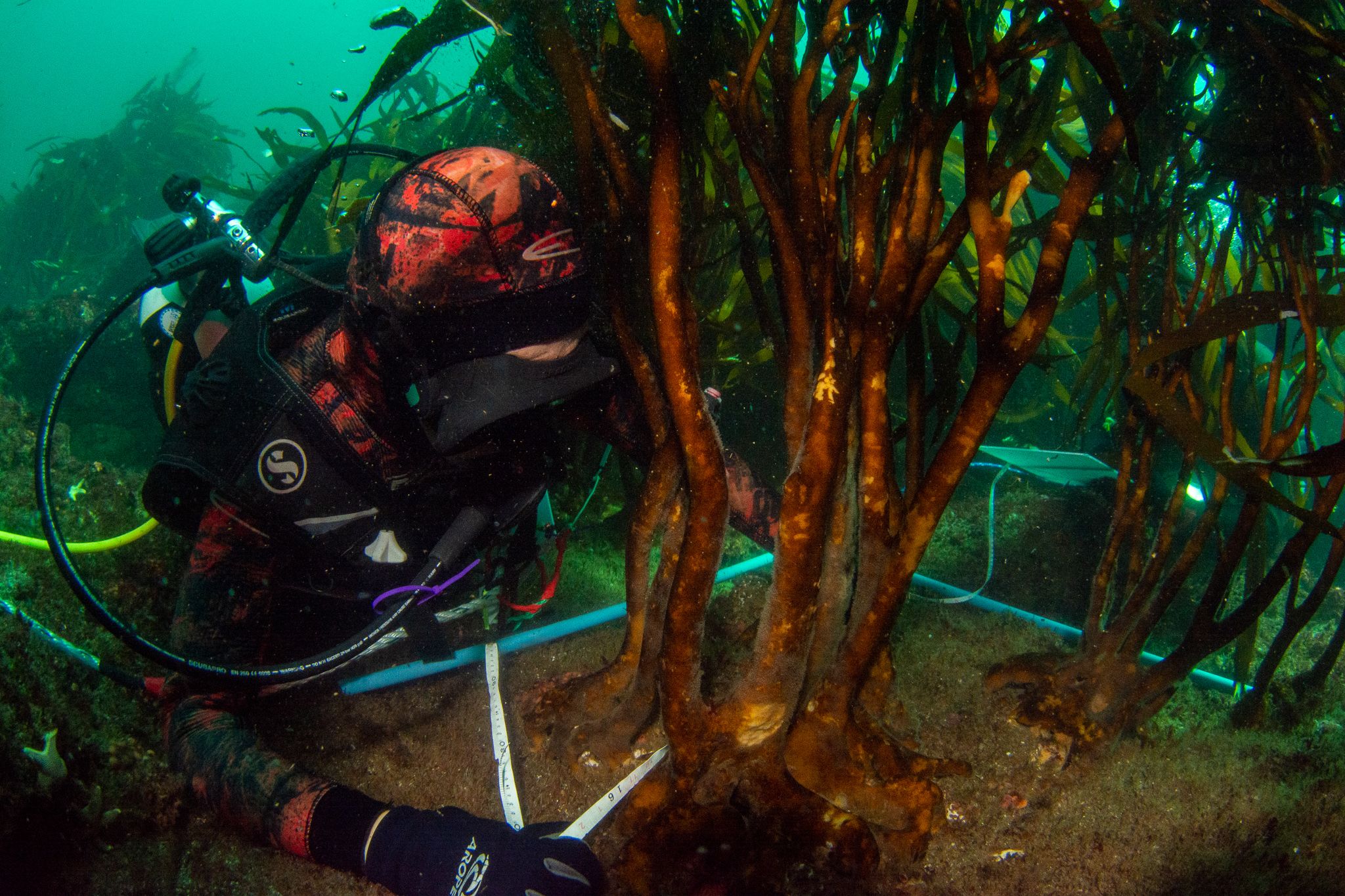
Lessonia trabeculata

Lessonia nigrescens
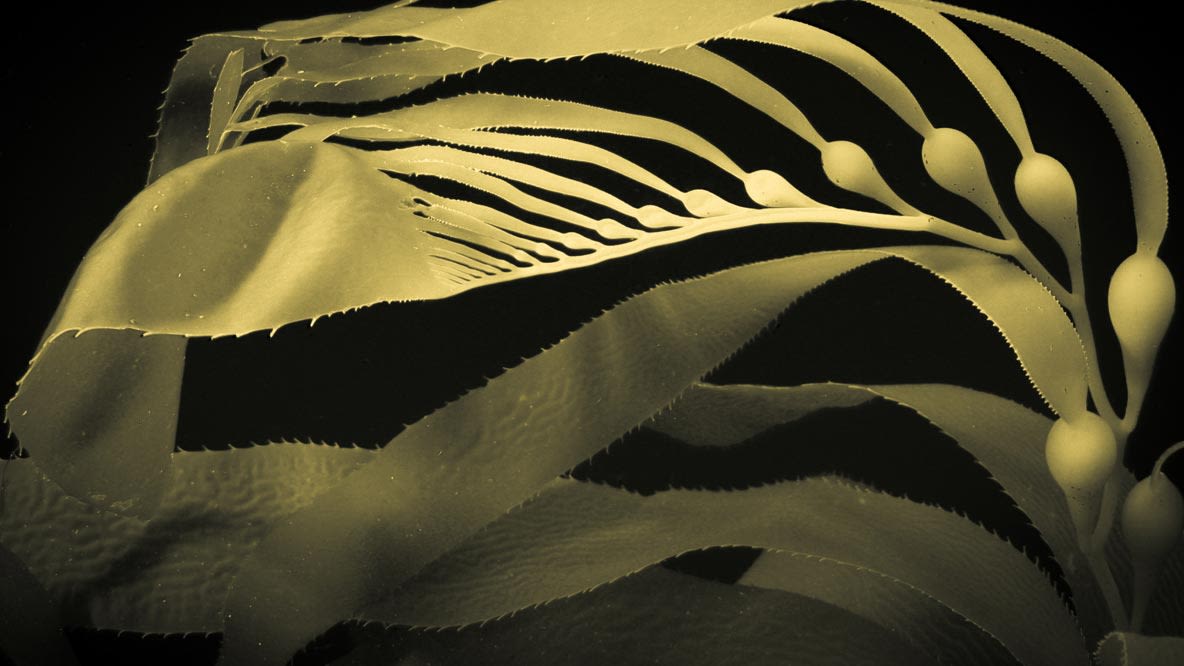
Macrocystis pyrifera
Peru’s kelp forests are dominated by four main species: Eisenia cokeri, Lessonia trabeculata, Lessonia berteroana, and Macrocystis pyrifera. Conservation, protection, and restoration efforts remain incipient, with most current work focused on building the scientific foundation for evidence-based strategies. Recent studies have begun mapping kelp populations and assessing their ecological significance. Local research on L. trabeculata has produced new estimates of population status and its potential for carbon capture in protected areas off the southern coast (15° S) (Aller-Rojas et al. 2020; Cevallos et al. 2024). Another study in the same region assessed microplastics in M. pyrifera, providing a baseline for their distribution in these ecosystems (Aguirre-Sánchez et al. 2023). Macroinvertebrate communities associated with E. cokeri, L. trabeculata, and M. pyrifera have been evaluated along the northern Humboldt Current System (Carbajal et al. 2022; Uribe et al. 2024; Fernandez Davila et al. 2025). Special attention is currently focused on E. cokeri, an endemic Peruvian species. Research has examined not only understory fauna but also bacterial assemblages (King et al. 2023), and has developed trophic models representing prey–predator relationships within E. cokeri kelp forests (Uribe et al. 2022). Much of this work has been enabled by multinational initiatives such as the UK-led project Kelp ecosystems in Latin-America: Pathways to ecological resilience (KELPER – UK, Chile and Peru), which includes participation by the Peruvian Sea Institute (Instituto del Mar del Perú, IMARPE). Additional projects have been supported by national funding in protected areas and by internal institutional grants. Alongside ecological research, reviews of seaweed resources and ecosystem services (Avila-Peltroche and Padilla-Vallejos 2020; Cuba et al. 2022), and the launch of Peru’s digital catalogue of aquatic biodiversity (IMARPE 2025), have strengthened national baselines. Updated analyses of macroalgae legislation (Guardia-Luzon and Avila-Peltroche 2024) have clarified the policy context for sustainable management and identified gaps in kelp harvesting regulation. The productive chain and socioeconomic dimensions have also been analysed (Vega Abad 2020). Civil society engagement is also increasing. One example is the Regional Environmental Commission of the Ancash Region (CAR-Ancash), composed of 79 public and private institutions, which is advocating for protection and restoration of E. cokeri (R. Uribe, pers. comm. 2025), demonstrating how local initiatives can complement national and international efforts.
Recent government-funded projects—though still limited—have strengthened the scientific foundation for kelp ecology and set the stage for long-term monitoring and evidence-based management. Platforms created through KELPER and national and smaller grants can support future collaborations, while new studies continue to expand the knowledge base. Advances in genetic research, supported by greater use of molecular techniques (Arakaki et al. 2021), create opportunities to assess population structure, connectivity, and resilience. Cultivation methods developed for M. pyrifera aquaculture may also be adapted for future restoration (Rameriz 2025). Social opportunities are also emerging. Recognition of women’s roles in seaweed harvesting is increasing, creating space for more inclusive, community-led initiatives (Programa de las Naciones Unidas para el Desarrollo 2025). Public awareness of kelp forests is rising, though still modest, and could support stronger integration of kelp ecosystems into coastal management and climate policy. In the short term, several actions could strengthen kelp conservation in Peru. Kelp mapping could be improved through remote sensing and modelling, and by increasing access to IMARPE survey data to support Integrated Coastal Zone Management (ICZM). Citizen science approaches involving artisanal fishers and divers could expand data collection while integrating traditional ecological knowledge. Finally, integrating kelp forests into regional environmental education programmes and action plans—especially within protected natural areas—could raise awareness across society.