
View Metrics
People living within 50km of kelp forests:
25,480,123GDP(B) within 50KM of Kelp:
$537.85 billionOcean Warming Rate by 2100 (°C):
1.61 °CKM2 of Kelp:
43,247Key Species:

Saccharina latissima
Laminaria digitata
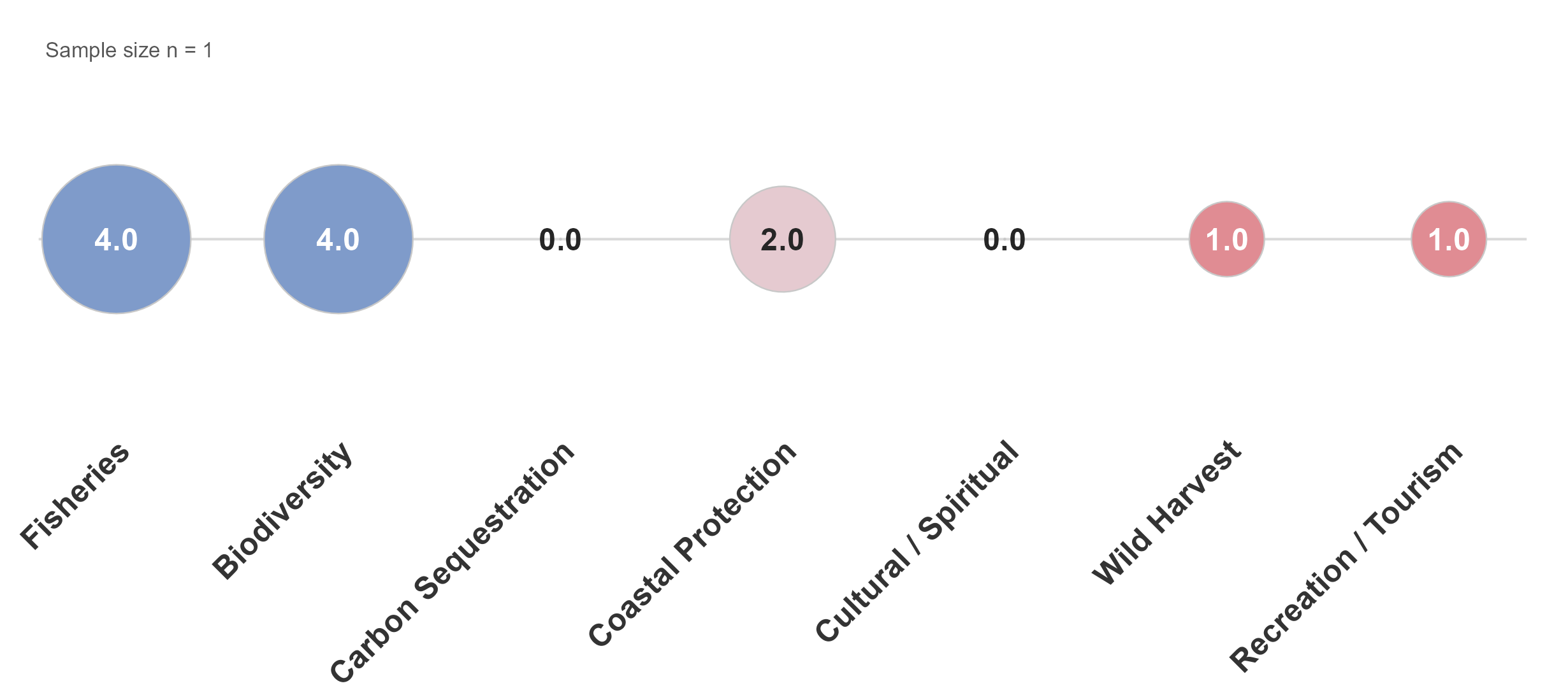
To date, the most effective engagement strategy has framed kelp through local economic and ecological relevance, particularly food systems. For example, kelp beds provide habitat for American lobster (Homarus americanus; Bologna and Steneck 1993). Because lobster fishing is central to New England’s maritime heritage and economy, kelp monitoring and conservation resonate strongly with fishers and coastal communities. Kelp farming has also introduced wider audiences to the ecological and commercial value of marine forests. Early industry growth relied on wild kelp for reproductive material, creating new stakeholder interest in monitoring and restoration. In recent years, major New England kelp seed suppliers have transitioned to gametophyte cultures, reducing pressure on wild kelp beds and enabling more reliable seed production timelines. Meanwhile, retailers of kelp products have promoted kelp ecosystem services to eco-conscious consumers, often with little distinction between wild and cultivated beds. The Eastern United States also has a long history of marine overexploitation (Steneck and Johnson 2013), and concern about losing remaining habitats could be leveraged to motivate stronger conservation. In Maine, this dynamic has played out in rockweed management. In 2014, concerns about excessive commercial harvesting—combined with “NIMBYism” from coastal landowners—contributed to the co-development of a rockweed fishery management plan (Arbuckle et al. 2014). Ongoing interest in assessing harvesting impacts and environmental stressors has since supported more comprehensive assessments (Johnston et al. 2023) and citizen science initiatives such as Project ASCO.