View Metrics
People living within 50km of kelp forests:
4,188,254GDP(B) within 50KM of Kelp:
$160.47 billionOcean Warming Rate by 2100 (°C):
2.42 °CKM2 of Kelp:
21,393Key Species:
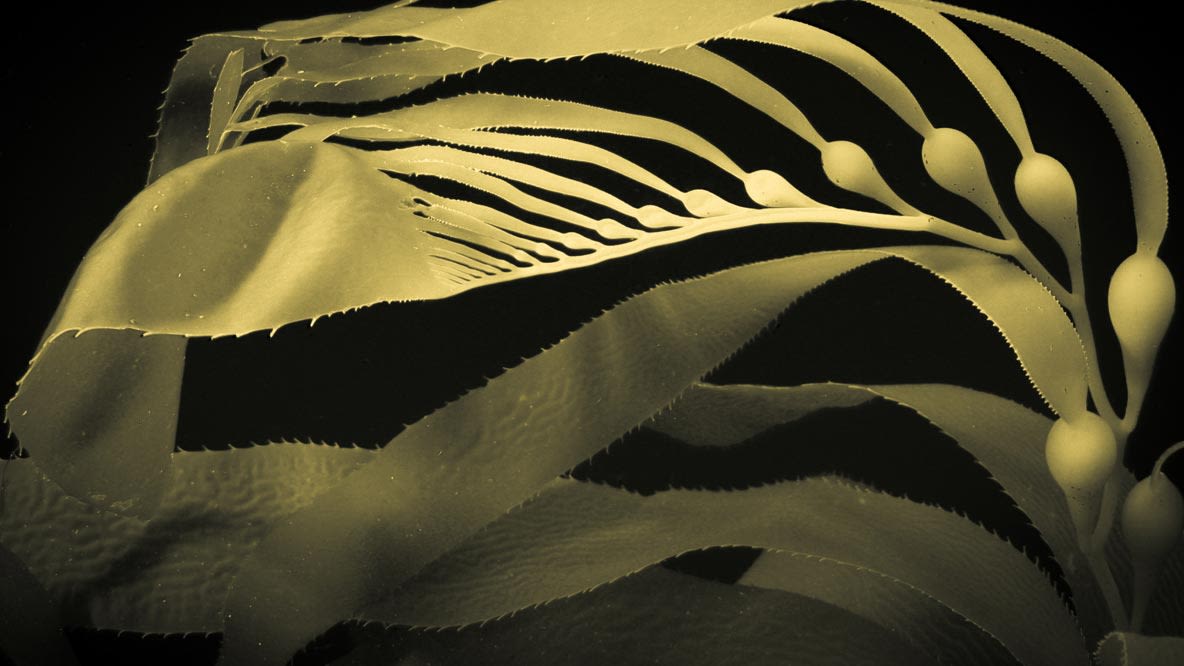
Macrocystis pyrifera

Nereocystis luetkeana
Collaboration around kelp conservation in British Columbia (B.C.) is expanding, with increasing alignment across sectors. The Kelp Node has emerged as a cross-boundary network connecting First Nations stewards, researchers, managers, policymakers, educators, and citizen scientists (kelpnode.org). Led by the Hakai Institute, the Kelp Node bridges data and efforts across institutional and jurisdictional boundaries, supporting research, technical guidance (Reshitnyk et al. 2023), long-term mapping, and ecological monitoring. Policy momentum is also growing. B.C.’s new Coastal Marine Strategy includes kelp-specific actions, and an internal kelp and aquatic plants working group is reviewing current and future policies related to wild harvest, restoration, and aquaculture. At the federal level, the Aquatic Ecosystems Restoration Fund (AERF) has become a major supporter of kelp restoration and planning. AERF funding has supported the Kelp Rescue Initiative, the B.C. Conservation Foundation, and Ocean Wise, enabling restoration across the Sunshine Coast, Vancouver Island, and Metro Vancouver. It has also funded key planning documents, including the Roadmap to Kelp Forest Recovery and the Greening the Salish Sea Project, which aim to reduce barriers, map kelp habitat, assess restoration suitability, and catalogue available techniques. Much of B.C.’s kelp monitoring and restoration work is led or supported by First Nations, many of whom are expanding marine conservation and food security programmes to include kelp forests. For example, the Marine Plan Partnership for the North Pacific Coast (MaPP)—a collaboration between 17 First Nations and the provincial government—has monitored kelp in the Great Bear Sea since approximately 2018 through a community-based Regional Kelp Monitoring Program. The province’s largest kelp restoration project is led by the Council of the Haida Nation in partnership with industry and federal agencies (Lee et al. 2021). The Great Bear Sea Marine Protected Area Network encompasses extensive kelp habitat and may include kelp as a key ecological indicator. Within this network, Gitdisdzu Lugyeks (Kitasu Bay), covering more than 33 km², serves as a model for conservation that foregrounds customary rights and local stewardship. Research and innovation continue to advance. Groups such as the Kelp Rescue Initiative are investigating outplanting methods, genetic diversity, thermal priming, grazer management, and historical kelp dynamics (Starko et al. 2024; Bemmels et al. 2025; Dykman et al. 2025). The University of Victoria Spectral Lab is using high-resolution imagery to map floating canopy extent and establish historical baselines (Mora-Soto et al. 2024a,b). Kelp farming companies are also exploring ways to align aquaculture with conservation and Indigenous food sovereignty, including the use of longline farming to support rocky substrate restoration.
With momentum building across research, policy, and practice, British Columbia is well positioned to translate progress into measurable gains. Province-wide tools such as the Restoration Roadmap, Restoration Atlas, and habitat suitability maps provide a strong foundation for identifying where restoration is most appropriate. Investment in long-term datasets and satellite monitoring will further improve tracking of kelp forest health and inform spatial management strategies. Governance and coordination present immediate opportunities. Connecting emerging networks like the Kelp Node with regulatory bodies can help align policy and practice. Regulatory reforms related to sea urchin harvesting, stock assessments, and restoration permitting could enable faster and more effective interventions. First Nations leadership remains central. Ensuring Indigenous-led monitoring, restoration, and nursery initiatives are integrated into policy and coordinated with other efforts will be critical as kelp cultivation scales up. Industry–research partnerships are also expanding, with collaborations among port authorities, kelp farms, universities, and NGOs offering pathways to balance ecological, economic, and community needs.