View Metrics
People living within 50km of kelp forests:
6,649,377GDP(B) within 50KM of Kelp:
$203.66 billionOcean Warming Rate by 2100 (°C):
2.4 °CKM2 of Kelp:
38,392Key Species:
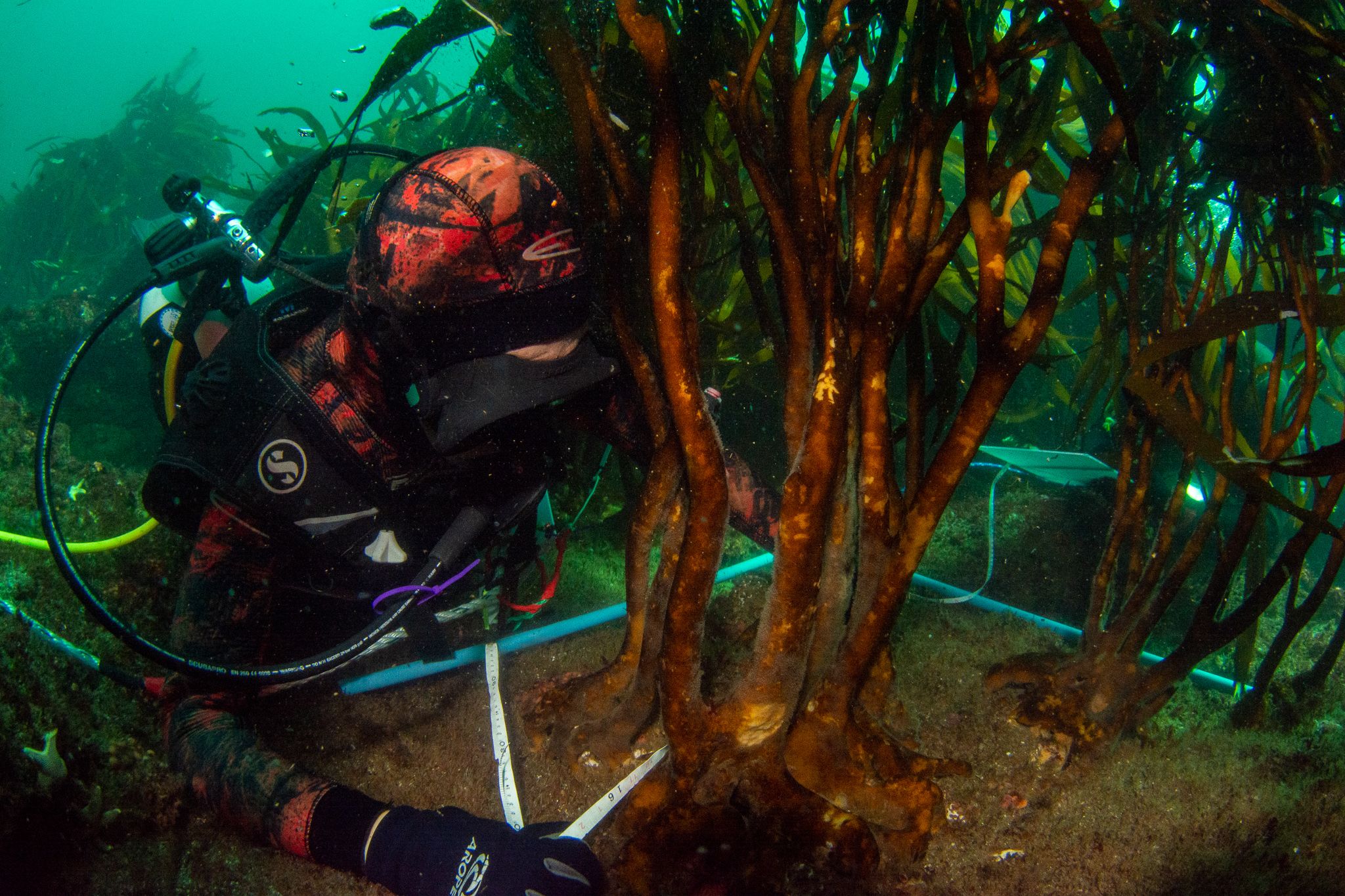
Lessonia trabeculata

Lessonia nigrescens
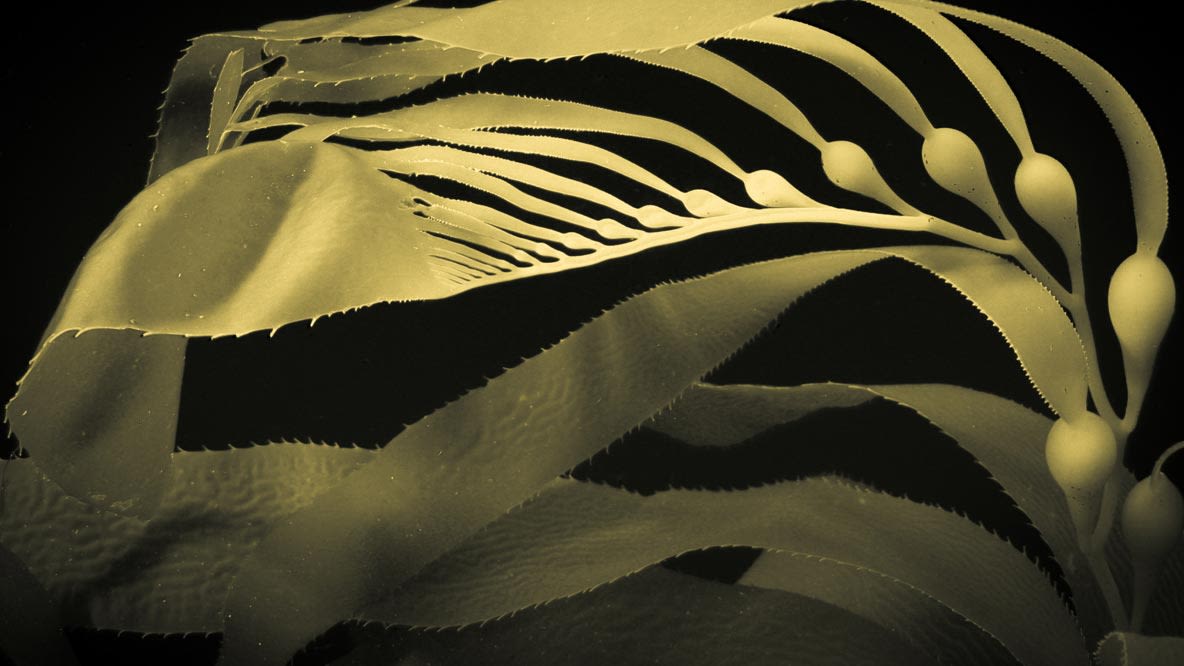
Macrocystis pyrifera
Chile has developed an increasingly comprehensive approach to kelp conservation through a multi-layered system that integrates policy, local governance, and community action. Territorial Use Rights for Fisheries (TURFs; locally known as Áreas de Manejo y Explotación de Recursos Bentónicos, AMERBs) have provided de facto spatial protection for kelp habitats, even when kelp has not been the direct management target. For example, in southern Patagonia, advocacy by local fishers’ associations and community groups helped secure a 10-year ban on harvesting Macrocystis pyrifera forests. Despite these favourable conditions for spatial management, the implementation of Marine Protected Areas (MPAs) remains limited. Only 8.2% of Chile’s national marine territory is under active implementation (Arafeh-Dalmau et al. 2025), meaning many MPAs exist primarily on paper and lack operational capacity. This gap is compounded by a severe funding shortfall—estimated at 90% (Conservación del Mar Patagónico 2001)—which constrains essential programmes in research, monitoring, enforcement, and education. At the community level, initiatives such as Bosque Huiro (bosquehuiro.cl) and Huiro Regenerativo have pioneered participatory restoration by combining scientific guidance, fisher stewardship, sustainable aquaculture, and ecological restoration (Saavedra et al. 2024). In central Chile, a restoration project in Caleta Horcón rebuilt a historically present kelp forest in collaboration with the local community and produced a best-practice manual to support replication elsewhere (Oyarzo-Miranda et al. 2023). Together, these efforts reflect an encouraging shift: communities are increasingly leading restoration and working collaboratively with academia. Chilean researchers are also developing and testing a suite of “state-of-the-art” restoration techniques, including spore seeding, thallus fragmentation, chimera outplants, juvenile transplantation, and holdfast attachment. While these methods have demonstrated biological feasibility, scalability and cost remain key barriers (Oyarzo-Miranda et al. 2023). Additional governance innovations are strengthening kelp protection within existing frameworks. Marine refuges—fully protected “no-take” zones established within AMERBs—are being implemented through community-based governance led by Fundación Capital Azul. These refuges enhance protection for kelp and associated biodiversity while working within fisheries management systems. Espacios Costeros Marinos de Pueblos Originarios (ECMPOs) provide another pathway: legally recognised coastal areas administered by Indigenous communities that safeguard customary uses while enabling protection and sustainable ecosystem management. This mechanism strengthens Indigenous governance and supports the integration of ancestral knowledge into contemporary management. These advances have been reinforced through national policy. In 2016, Chile approved Law No. 20,925 (restocking and cultivation of seaweed), which encourages restocking and cultivation practices in artisanal fishing (Oyarzo-Miranda et al. 2023). Cross-sector dialogue spaces are also emerging where academia, politics, and the private sector converge around the challenges of sustainable seaweed use, proposing public policy directions to promote consumption, valuation, cultivation, conservation, and sustainability (proyectachile2050.cl/proyecto/). Chile has also advanced rapidly in kelp mapping and remote monitoring, including long-term observations of centenary stands in Patagonia and seasonal dynamics of Macrocystis forests in central Chile (Mora-Soto et al. 2021; Gonzalez-Aragon et al. 2025). These efforts have supported new monitoring platforms such as the Blue Alert Initiative and tools for tracking kelp distribution under future climate scenarios (Gonzalez-Aragon et al. 2024). Regional professional networks are growing as well. The Spanish-language edition of the Kelp Mappers Meeting has brought together NGOs, community groups, artists, researchers, and private businesses to share technical updates and raise the visibility of kelp forests across Latin America (Arafeh-Dalmau et al. 2024). Finally, international collaborations—such as Kelp Ecosystems in Latin America: Pathways to Ecological Resilience (KELPER; Chile–Peru–UK)—are advancing understanding of subtidal kelp dynamics in the South Pacific (Uribe et al. 2024; Pérez-Matus et al. 2025). Monitoring and manipulative experiments have also underscored how small-scale harvest regimes can promote resilience in exploited kelp systems (e.g., Macrocystis pyrifera, Lessonia spp., Durvillaea incurvata), providing science-based guidance for management (Westermeier et al. 2019; Fica-Rojas et al. 2025).
Chile is well positioned to align kelp conservation with evolving national marine policy. Institutional restructuring of fisheries and conservation bodies has opened opportunities for kelp-specific regulation and funding. The growing critical mass of practitioners in kelp mapping and monitoring—strengthened through networks such as the Kelp Mappers Meeting—creates an opportunity to standardise methodologies, generate long-term datasets, and deepen international collaboration. Public awareness is also rising, strengthening cultural narratives around the ecological, economic, and social value of kelp forests. Platforms such as Blue Alert, which aims to track kelp health in near real time using satellite data, are generating interest among decision-makers, technology partners, and the public. Sustained investment in participatory monitoring and locally driven solutions will be essential to scale efforts without undermining community trust or ecological integrity.