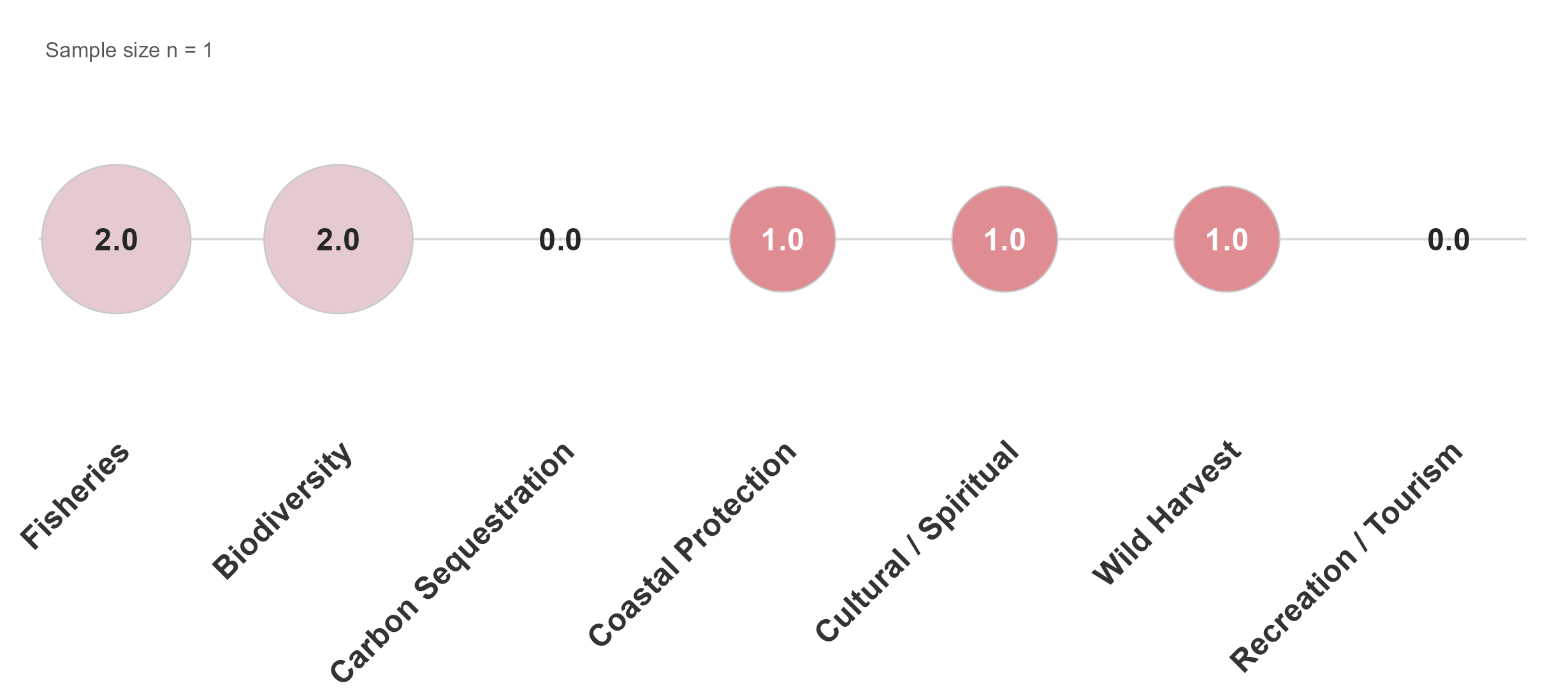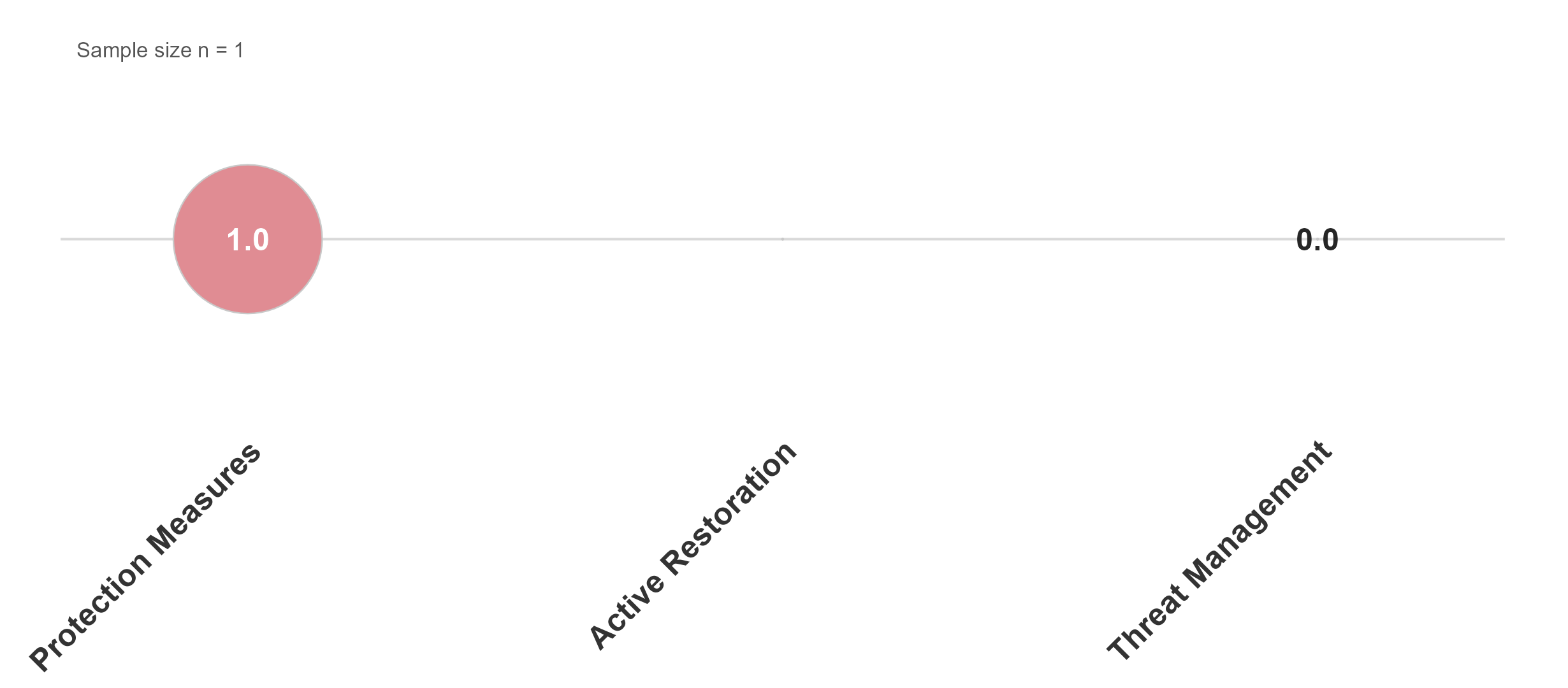
The West Bering Sea likely contains important kelp habitat, but recent data on distribution and change are scarce. Past surveys described macrophyte communities, yet current responses to climate variability are largely unknown. Harvest is minimal, creating a window to learn and plan before higher-intensity uses grow. Some habitat falls within existing reserves, and satellite datasets now cover parts of the region, providing early trend signals. Next is baseline mapping, ecological assessments and integration of kelp into broader Bering Sea management.

View Metrics
People living within 50km of kelp forests:
247,516GDP(B) within 50KM of Kelp:
$4.29 billionOcean Warming Rate by 2100 (°C):
2.56 °CKM2 of Kelp:
2,317Key Species:

Saccharina japonica
Information on kelp forests in the West Bering Sea remains sparse, especially relative to the better-studied East Bering Sea under US jurisdiction. Several surveys of macrophyte communities were conducted between 2002 and 2011 (e.g., Selivanova 2002, 2004, 2011) and later supplemented (e.g., Evseeva 2019). However, there are no data documenting changes in kelp distribution, abundance, or management over the past three years.
The West Bering Sea represents an underexplored frontier for kelp science. Priorities include baseline mapping, ecological assessment, and evaluation of conservation options. Kelp harvesting in the northern Russian Far East is currently undeveloped, with small-scale harvest limited to the Commander Islands (Petropavlovsk-Komandorsky subzone), where catches have reached a maximum of only 4 tonnes in recent years (Evseeva et al. 2024). The region also offers opportunities for binational collaboration with the United States on shared Bering Sea ecosystem research and conservation.
Some kelp habitats receive protection within the Commander Islands State Nature and Biosphere Reserve, providing a degree of legal safeguarding. In addition, Kelpwatch.org recently expanded its global dataset to include monitoring along the Kamchatka Peninsula since 1999, covering both the Bering Sea and the Sea of Okhotsk. This is one of the few long-term datasets available for the region and provides a starting point for future monitoring and conservation planning.