
View Metrics
People living within 50km of kelp forests:
1,345GDP(B) within 50KM of Kelp:
$0.01 billionOcean Warming Rate by 2100 (°C):
2.02 °CKM2 of Kelp:
838Key Species:

Durvillaea antarctica
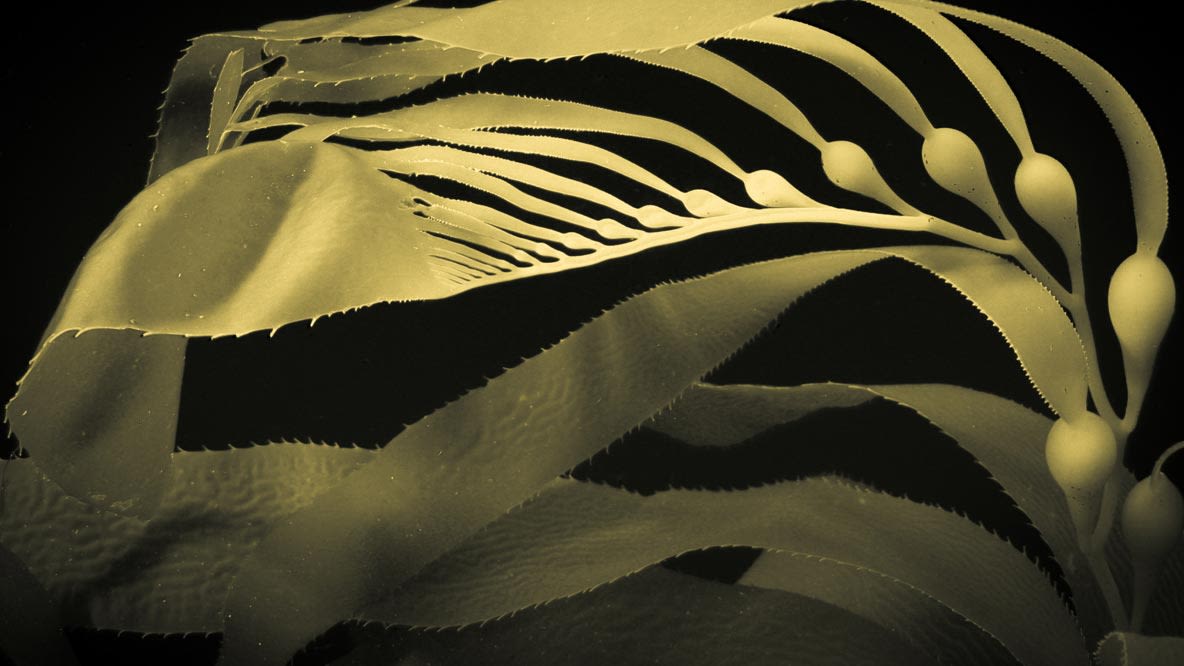
Macrocystis pyrifera
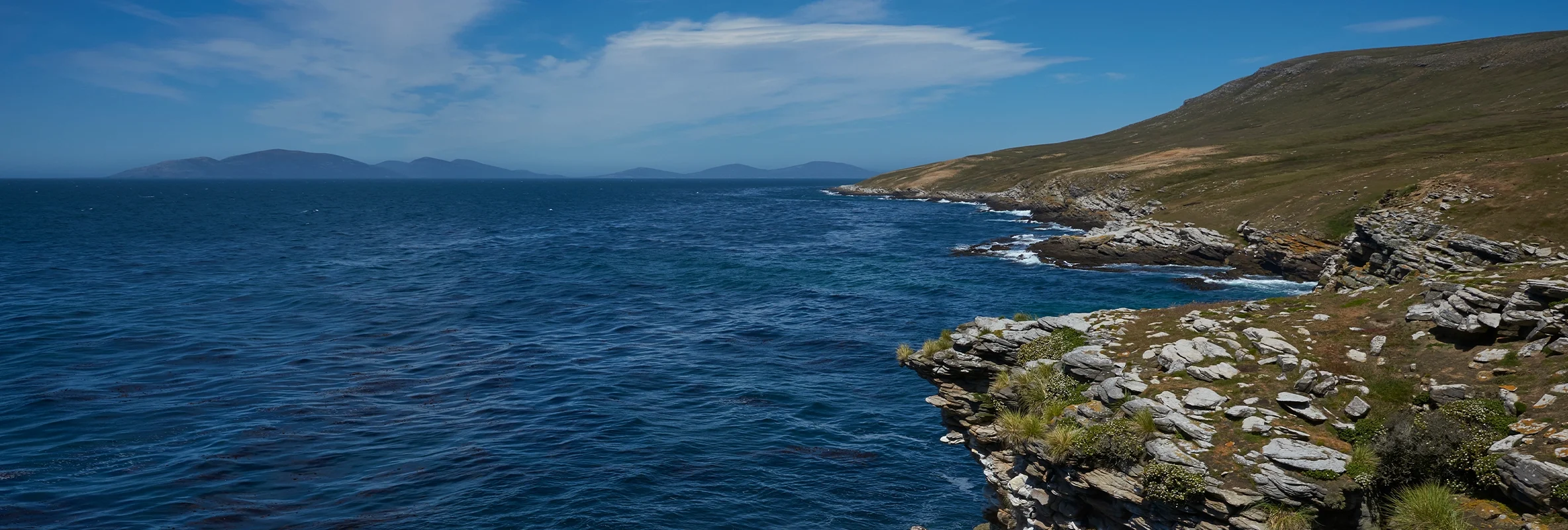
Sub-Antarctic islands host exceptional marine biodiversity and extensive kelp forests dominated by Macrocystis pyrifera (Féral and Saucède 2021). Large MPAs reflect this value, including the French Southern Territories National Nature Reserve, inscribed on the UNESCO World Heritage List in 2019 and now among the world’s largest MPAs. Bull kelp (Durvillaea antarctica) fringes many rocky shorelines, while Laminaria pallida occurs in shallow waters around Saint-Paul and Amsterdam islands (Féral and Saucède 2021). Despite their importance, kelp distribution, condition, and dynamics remain poorly characterised due to limited monitoring and outdated inventories (Belsher and Mouchot 1992; Mora-Soto et al. 2021). As sub-polar regions warm rapidly, improved baseline characterisation and long-term observation are essential: degradation would have major consequences for biodiversity and coastal ecosystem functioning. Recent national research initiatives and polar institutes have begun to address these gaps via multi-scale monitoring integrating autonomous sensors, underwater imagery, eDNA, and high-resolution satellite data (e.g., Sentinel-1/-2, Pleiades). Implemented with MPA managers, these programmes are strengthening conservation policy and local capacity in remote settings.
Sustained collaboration between national research programmes and conservation managers is essential to secure stable funding, logistics, and long-term continuity. The lack of permanent human populations creates a structural constraint, limiting citizen science potential. Emerging technologies provide practical solutions for remote monitoring: low-cost sensors, improved underwater and satellite imagery, and eDNA can deliver data where field campaigns are difficult. Long-term ecological research programmes are also critical to stabilise monitoring frameworks and financing. Beyond national efforts, international collaboration—such as through SCAR initiatives including ANTOS—can provide political backing and integrate local management into wider conservation strategies.
Over the last three years, progress has been driven by expansion of long-term ecological research programmes that connect local monitoring with national and international frameworks. Interdisciplinary collaboration—linking climate science, ecology, and remote sensing—has enabled more integrative and predictive approaches to anticipating climate impacts on kelp dynamics (Pohl et al. 2021). International coordination remains crucial. Although governed by multiple nations, the sub-Antarctic islands form an interconnected ecological region; effective monitoring and conservation therefore require cross-jurisdictional coordination to capture shared environmental and climatic drivers.