
Summary:
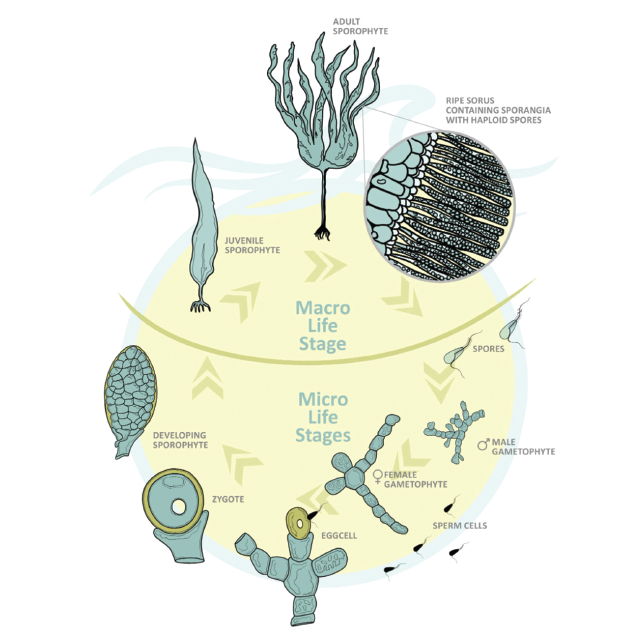
Despite underpinning entire polar and temperate coastal ecosystems, kelp is rarely examined in standard ecotoxicology test batteries, and no universally accepted testing guidelines exist despite the growing regulatory interest in macroalgal tests. Declines in kelp populations, linked increasingly to pollution and other anthropogenic stressors, reinforce an urgent need to quantify contaminant effects on kelp health and survival. Reliable and consistent kelp cultivation protocols are therefore essential for generating ecotoxicological data that both addresses critical gaps in environmental risk assessment and provides alternatives to vertebrate testing in toxicology. The microscopic kelp life stages present a particular opportunity for reproducible assays at recognized bottlenecks in the life cycle, where kelp is often most sensitive to environmental stressors. This review consolidates laboratory cultivation techniques for three key species: Laminaria hyperborea, L. digitata, and Saccharina latissima, drawing on published literature and practitioner interviews. Protocols are outlined for spores, gametophytes, juvenile sporophytes, and mature sporophytes, with an emphasis on managing life stage transitions. Key parameters include temperature (5–15°C), nutrient enrichment (F2P), and precise control of light intensity, wavelength, and photoperiod. Strategies to address challenges such as contamination, genetic drift, and long-term culture maintenance are identified, alongside a discussion of emerging efforts to standardize kelp bioassays. The synthesis supports a broader and more robust use of kelp-based assays, which will strengthen our capacity to assess and understand pollution risks to kelp forests, and advance conservation and sustainable management of coastal ecosystems.